




Teran
a globally unmatched wine
The Karst plateau is home to the Refošk grape, which births the Teran wine.
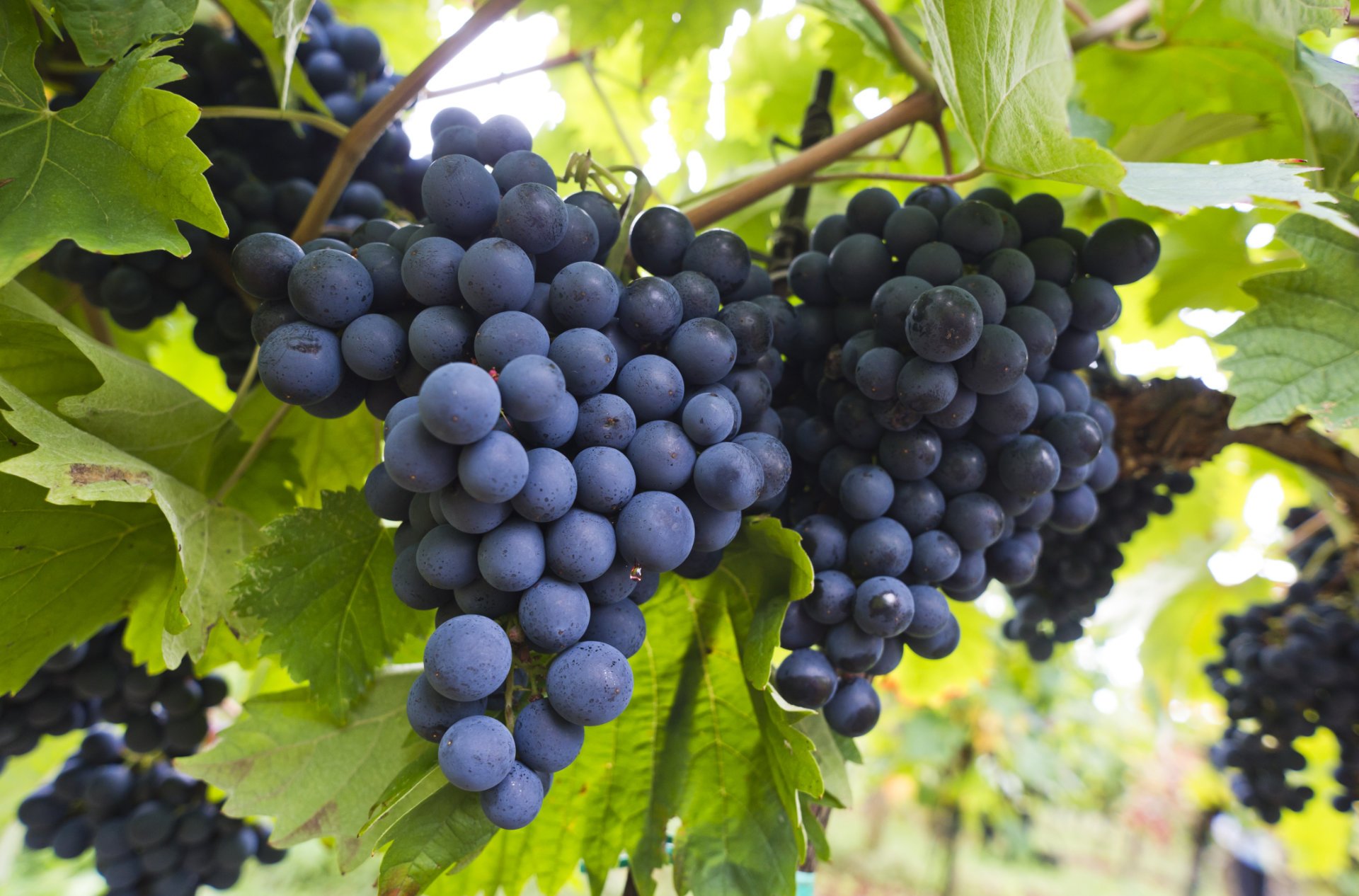
While the Refošk grape variety is not exclusive to the Karst, it's no stranger to neighbouring regions, where its final product is called Refošk. However, it is in the Karst that this variety finds truly exceptional conditions, making its wine singular in more ways than one. The large, ruby-red grape bunches ripen abundantly on both traditional high wooden vine arbours and in modern vineyards. Through careful tending and the gentle influence of the Karst climate, each berry captures the remarkable character of the region’s rich red soil, jerina.
Teran, produced in the Karst according to time-honoured methods, is easy to recognize even for casual tasters, thanks to its deep, dark-red hue, its distinctive berry-like aroma, and its pleasant acidity. With a bit of guidance during tasting, one can uncover even more subtle flavours and delicate nuances hidden within the wine.
Refošk or Teran?
For centuries, the Refošk variety has raised questions about why its wines vary so markedly across regions—Slovenia and Italy’s Karst plateau, Slovenian and Croatian Istria, the Vipava Valley, Goriška Brda, and Italian Friuli—and whether they might even represent distinct varieties. With advances in knowledge, experts have gradually found the answer. The differences boil down to soil composition and climatic conditions. Thus, Teran from the Karst stands out in many ways. Its unique composition, including a higher content of red pigments and total acidity, distinguishes it from other Refošk wines and red wines in general. Thanks to these special characteristics and the traditional methods of production in the Karst Plateau winegrowing sub-district, Teran in Slovenia is protected with the PTP label, i.e. a recognized traditional designation. In Italy, Teran carries the DOC designation.